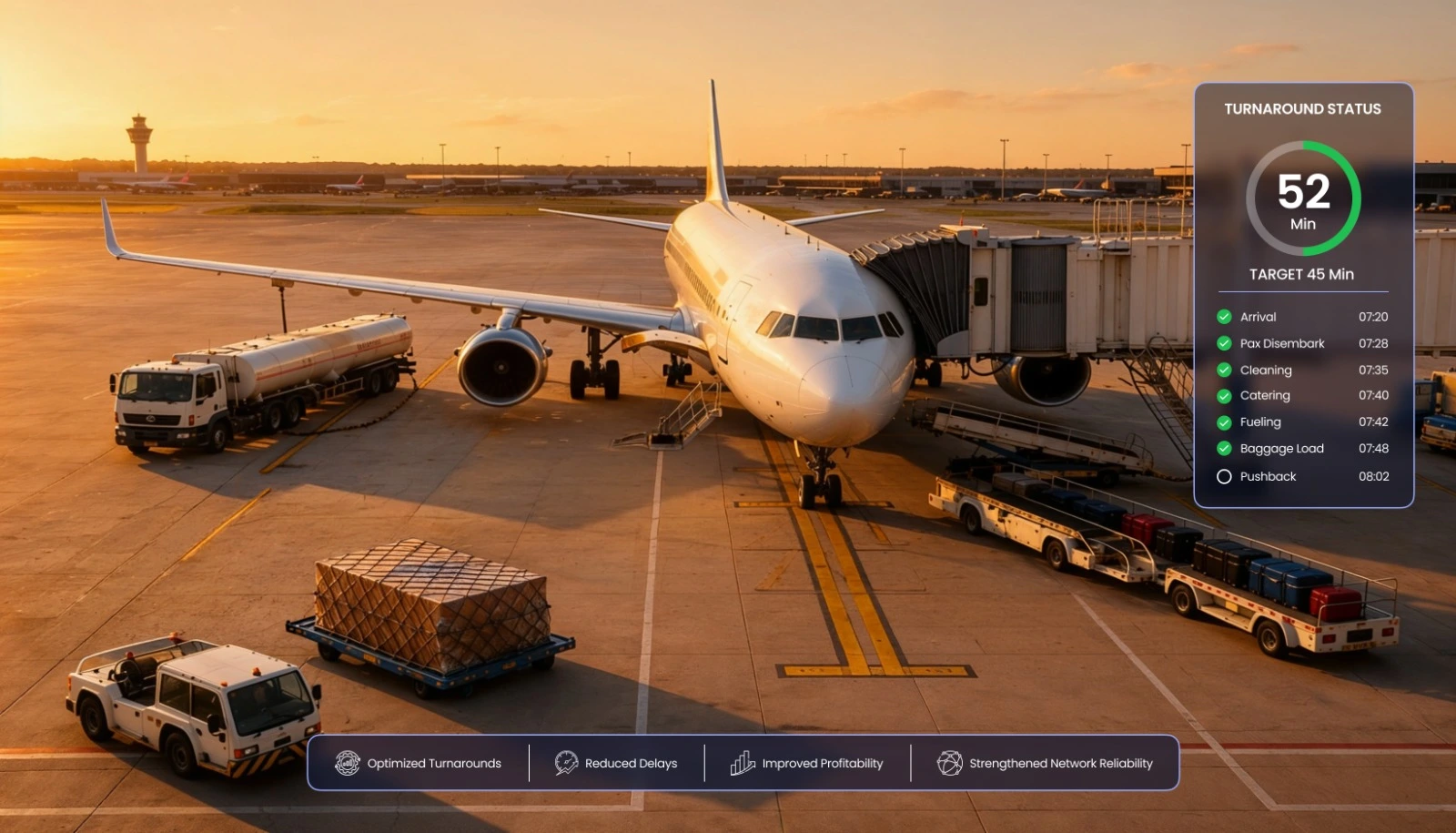
$100.76 per minute. Not a penalty. Not a fine. Simply the average cost of U.S. aircraft block time.
Airlines for America’s 2024 data breaks it down precisely: $35.23 in labour, $33.06 in fuel, and the remainder absorbed by maintenance and overhead. Airline executives are familiar with these figures but rarely talk about them.
When an aircraft sits on the apron for just five extra minutes during a morning peak, the cost has already crossed $500 before a single operational decision has been made. Even worse, that delay rarely stays contained to one gate; it travels.
EUROCONTROL’s network data is unambiguous, showing that one minute of ground delay during the morning peak multiplies into 2.2 minutes of arrival delay across the network. Crew schedules tighten, connecting passengers miss flights, and the next departure is running late before boarding even begins.
That’s what poor aircraft turnaround management actually costs. And yet, with all it does for profitability and network reliability, it stays as one of aviation’s most underinvested performance metrics.
The apron isn’t just busy. It’s unforgiving.
Passengers think of a turnaround as a quick clean and a bag swap. Ground teams know better. A short-haul narrowbody turnaround window can be as tight as 25 minutes.
Inside that window, tasks include passenger disembarkation, boarding, baggage offload and reload, cabin cleaning, catering exchange, refuelling, and waste disposal. Several crews, numerous vehicles, different companies, all converging on the same patch of tarmac at once.
One task running three minutes over schedule pulls everything else with it.
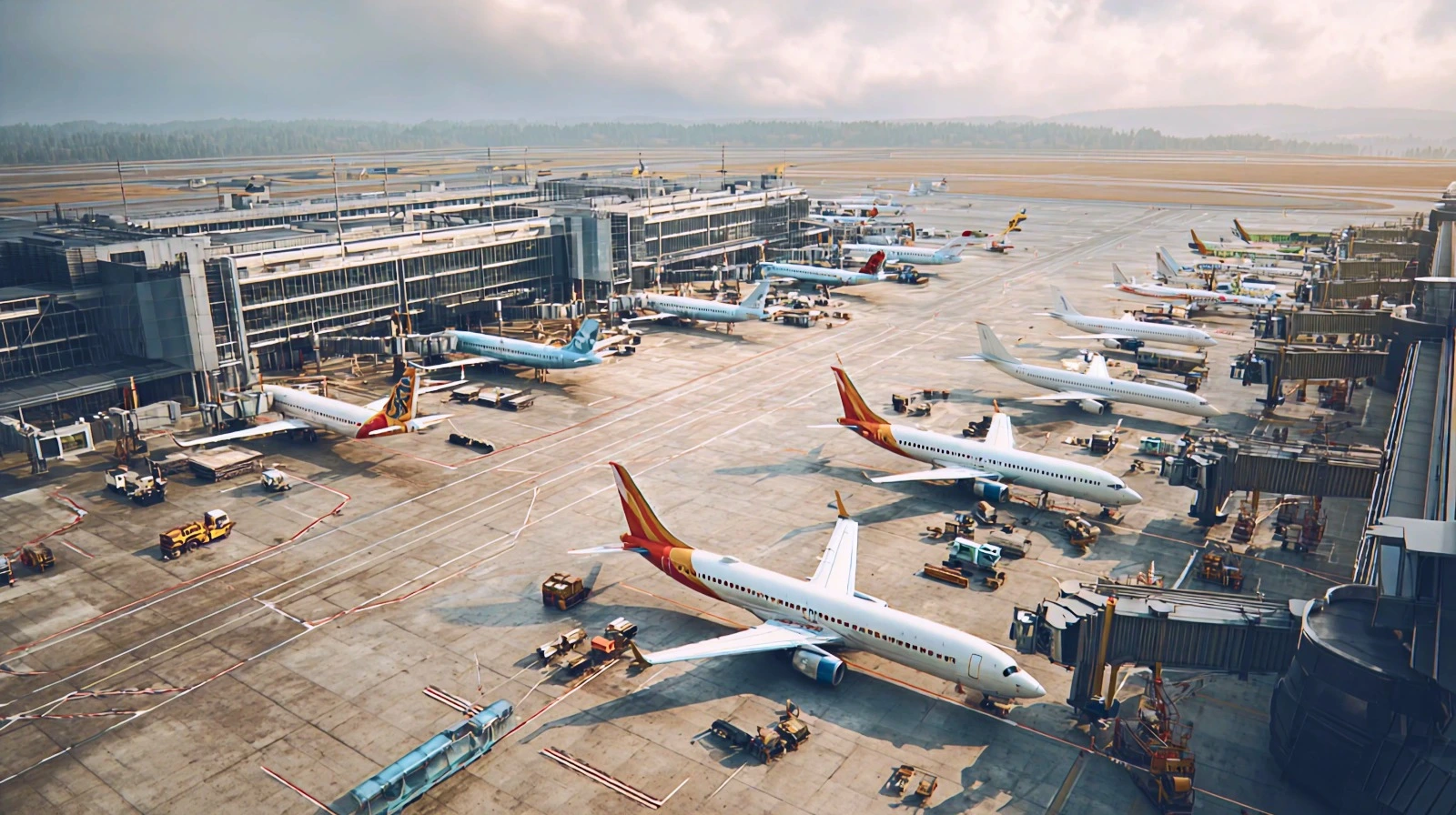
Most teams still rely on radio calls, manual checklists, and siloed systems, which haven’t changed in decades. They hold up on manageable days. On busy ones, the cracks show fast. And with today’s traffic volumes, most days are busy.
The problem has never been the people
Ramp crews aren’t the weak link here. They are skilled, quick, and working hard right from the moment an aircraft parks. The real issue is that the right information rarely reaches the right person at the right moment.
A ground handler who doesn’t know an inbound flight is running eight minutes behind can’t make a smarter call about scheduling a cleaning crew. That’s not a performance problem; it’s a visibility problem.
Airlines operate their own data systems. Ground handlers use separate ones. Airport operations run a third. These platforms don’t always talk to each other in real time, so coordination defaults to phone calls and whoever’s most experienced in the room. That works well enough on quiet days but on busy ones, a two-minute gap nobody flagged on time quietly becomes a 20-minute departure hold.
How apron management systems are closing the gap
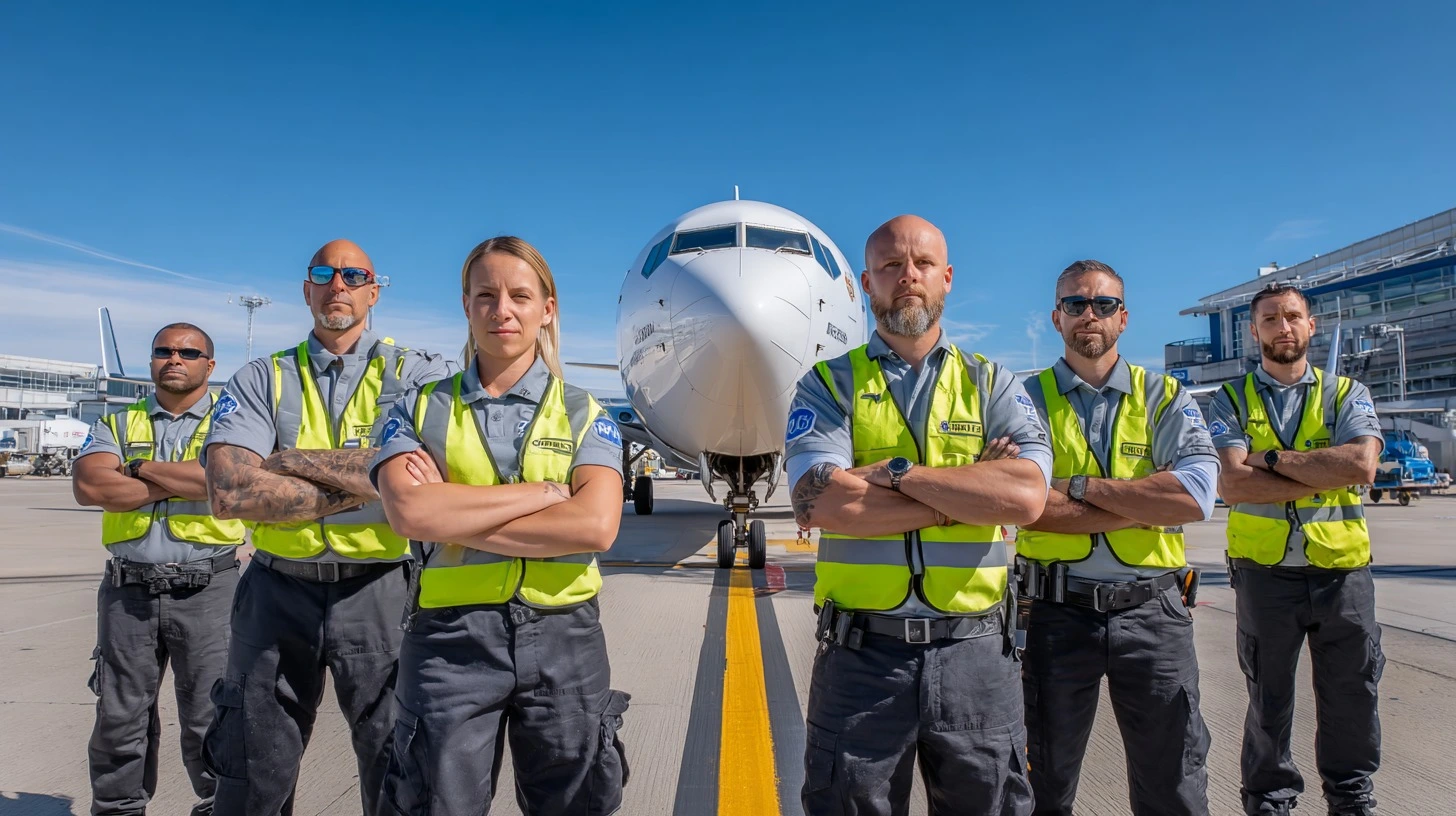
A modern apron management system brings all of that fragmented information into one live platform. It connects the aircraft turnaround management, ground handling coordination, and airport operations control so every stakeholder can access the same information simultaneously.
The nature of decision-making changes when the operations centre, airline, handler, and ATC are all working to the same turnaround milestones and predicted off-block times. As the gate allocation tightens, early warning replaces after-the-fact explanation, and teams catch a slipping milestone before it becomes a delay code.
Ground handling AI: from recording to predicting
Airports have had cameras and sensors on the apron for years. The shift that matters isn’t about data collection. It’s about what modern ground handling AI can do before anything goes wrong.
Assaia’s 2025 Turnaround Report tracked over 450,000 AI-enabled turnarounds at 15 airports across Europe and North America from April 2024 through to March 2025. The median departure delay dropped from four minutes to three, a twenty-five per cent improvement.
Average delays held steady at 11 minutes despite record traffic volumes. Gate efficiency improved by five per cent, which translates to approximately one additional rotation per day across every 20 stands, and all of this without a single new gate being built.
The mechanism is straightforward. The computer vision cameras track each turnaround milestone in real time for:
- aircraft on;
- door open;
- bridge retracted;
- cones cleared.
Predictive analytics surface a departure readiness estimate before any manual confirmation. When a task slips, an alert reaches the right person while there is still a window to act.
The same camera infrastructure monitors foreign object debris, flags unauthorised access, and catches safety violations before they have a chance to ground an aircraft.
The numbers are getting hard to ignore
Early numbers from integrated AMS deployments are hard to dismiss. Turnaround time variability drops five to ten per cent within the first 12 to 18 months. Ramp-related delays fall by as much as thirty per cent. These aren’t modelled estimates; real operations are producing these results.
Assaia’s 2024 data adds weight to this picture. Airports that adopted AI-powered turnaround management in 2023 and 2024 cut ground delays by six per cent and improved turnaround times by four per cent. The daily gate turns went from four to five while traffic was continually rising.
Getting there takes a lot more than just good software. Data definitions need to be standardised across every stakeholder. KPIs have to reflect shared goals, not individual ones. Systems need to connect to existing infrastructure, not replace them. Frontline teams need to be brought in early; without their trust in the platform, the insights go unused.
EUROCONTROL’s Summer 2025 data logged 37,034 flights on its peak day, with 3.3% year-on-year traffic growth. Traffic is not slowing down, and schedule padding has its limits. Airports that have elevated turnaround management to a board-level priority are seeing measurable gains. For those yet to make that shift, the costs continue to accumulate.
It all adds up quietly. A minute here, $100.76 there.