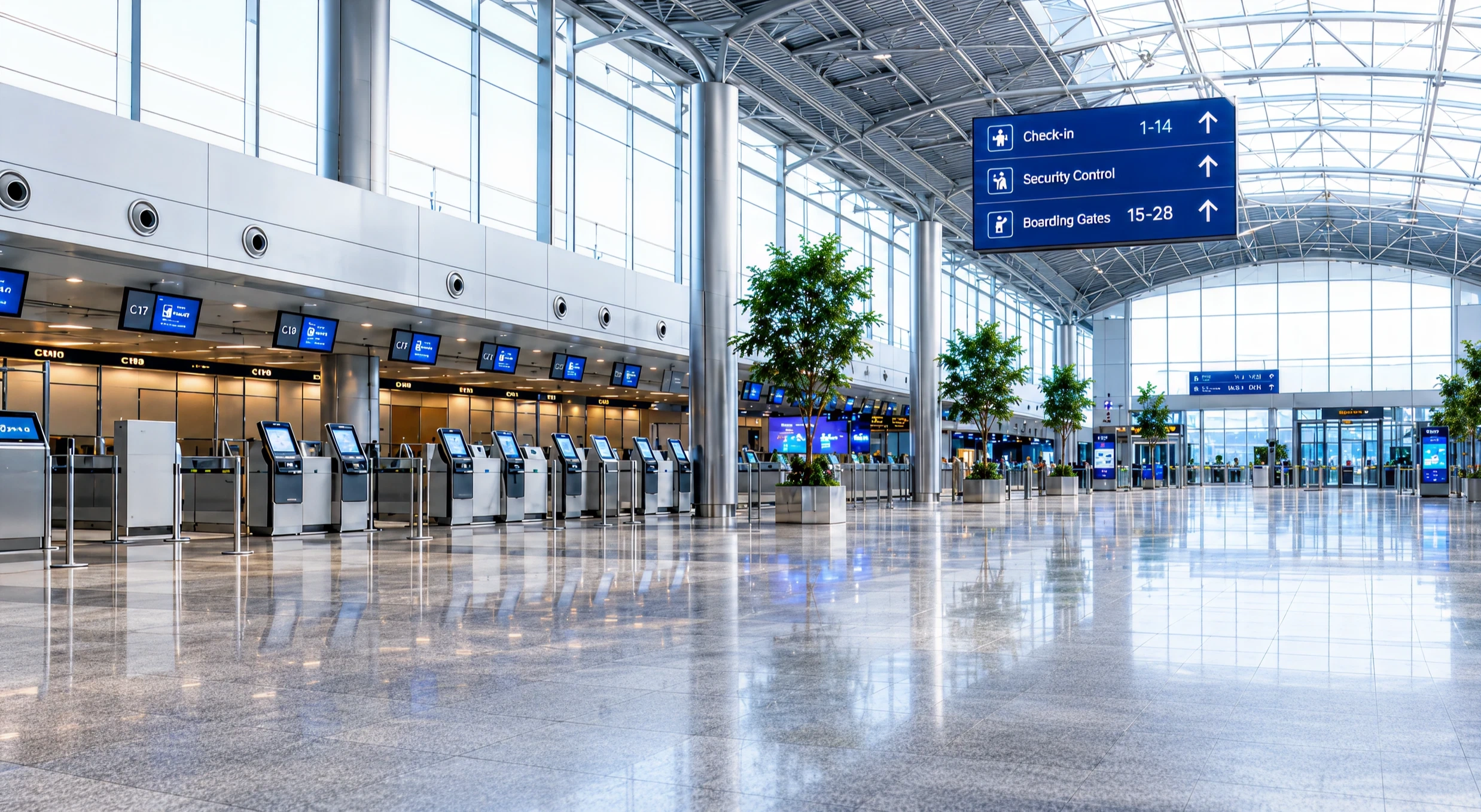
Something has quietly shifted in how airports actually work.
Not just at the gate or on the apron, but in the core logic holding the whole operation together. The old model worked on teams reacting to problems, platforms that wouldn’t share data, and workflows stitched together through radio calls and institutional memory. All of that is giving way to something structurally different. Airport technology is beginning to anticipate rather than respond.
The capital flowing into that shift tells you how seriously the industry has committed. The Airport 4.0 market is forecast to reach $23.79 billion by 2030, growing at 12.9% annually. Broader aviation digital transformation spending across AI, IoT, cloud infrastructure, and predictive analytics is projected to accelerate considerably through 2033. These aren’t aspirational figures. They reflect operators who’ve concluded that manual coordination can no longer scale to what air travel now demands.
From isolated tools to integrated ecosystems
Airport operations have functioned on fragmented infrastructure for a long time. Airline platforms, ground handler software, and air traffic management tools have rarely exchanged data in real time, with each system doing its job in relative isolation. On manageable days, that arrangement held together. As traffic volumes have grown, the gaps between those systems have become far harder to absorb.
The scale of the challenge has sharpened the urgency considerably. Global air travel reached 9.8 billion passengers in 2025, and terminals designed for a fraction of that volume are now absorbing the full weight of it. The pressure isn’t confined to departure boards. It runs through every operational layer: check-in, security, baggage handling, stands, cargo, and energy systems. Each layer carries its own data, failure modes, and staff trying to hold things together without a complete picture of what’s happening across the rest of the airport.
The airports responding well to this challenge aren’t simply buying better tools; they are rethinking the underlying architecture entirely. That’s how aviation digital transformation completes the picture.
IoT: the sensing layer that comes first
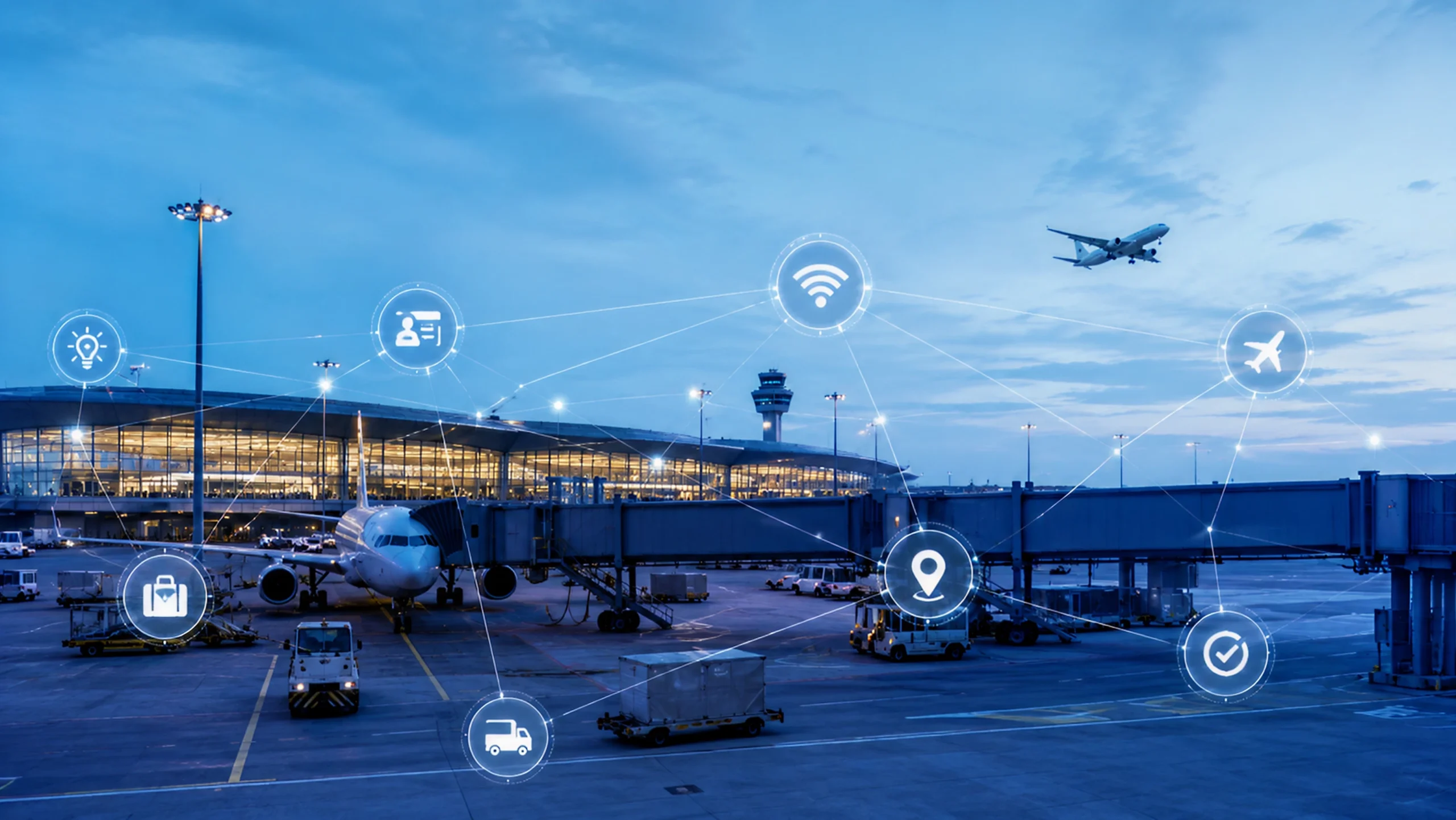
Thousands of sensors are continuously collecting data across runways, ground support equipment, HVAC systems, and baggage conveyors. When that data is processed effectively, it shifts airport operations from reactive firefighting to genuine foresight. For example, leading airports implementing sensor-driven energy management are recording measurable consumption reductions whilst simultaneously automating their emissions reporting.
The IoT layer extends well beyond airside. Passenger flow sensors, dwell-time monitoring, and smart retail systems are giving airport operators visibility into terminal behaviour that was previously opaque. IATA’s 2025 Global Passenger Survey, which drew on responses from 10,000 passengers across 200 countries, found that 78% of travellers want a single mobile app combining a digital wallet, digital passport, and loyalty cards to navigate entire journeys. Meeting that expectation depends entirely on airports having live data infrastructure at every touchpoint along the way.
That kind of integration cannot happen through individual systems working in parallel. It requires the IoT sensing layer to feed into something considerably bigger.
AI: from data collection to decision intelligence
What’s changed isn’t the presence of cameras and sensors across airport infrastructure. It’s what AI can now do with that data and how far in advance it can act on a developing situation.
Across the terminal and airfield, AI is reshaping decisions that once relied entirely on human judgement under pressure. Air traffic controllers are already being assisted by decision-support tools that analyse real-time weather patterns, traffic density, and airspace conditions, moving the industry from rule-based automation towards systems that reason meaningfully about what’s coming next.
One of the clearest expressions of this is the Airport Predictive Operations Centre, or APOC, which consolidates live feeds from airside, terminal, and landside operations into a single decision environment. Indira Gandhi International Airport in Delhi uses AI-powered predictive models alongside real-time weather and runway data to facilitate safe landings during dense fog, a problem that once grounded aircraft across the entire network.
Airports that have deployed integrated AI-powered analytics platforms are reporting 41% faster incident response times and a 28% improvement in on-time departure performance against pre-digitalisation baselines. This is what mature airport technology looks like in practice: not a smarter version of the old system, but a fundamentally different one.
Automation: where intelligence becomes execution
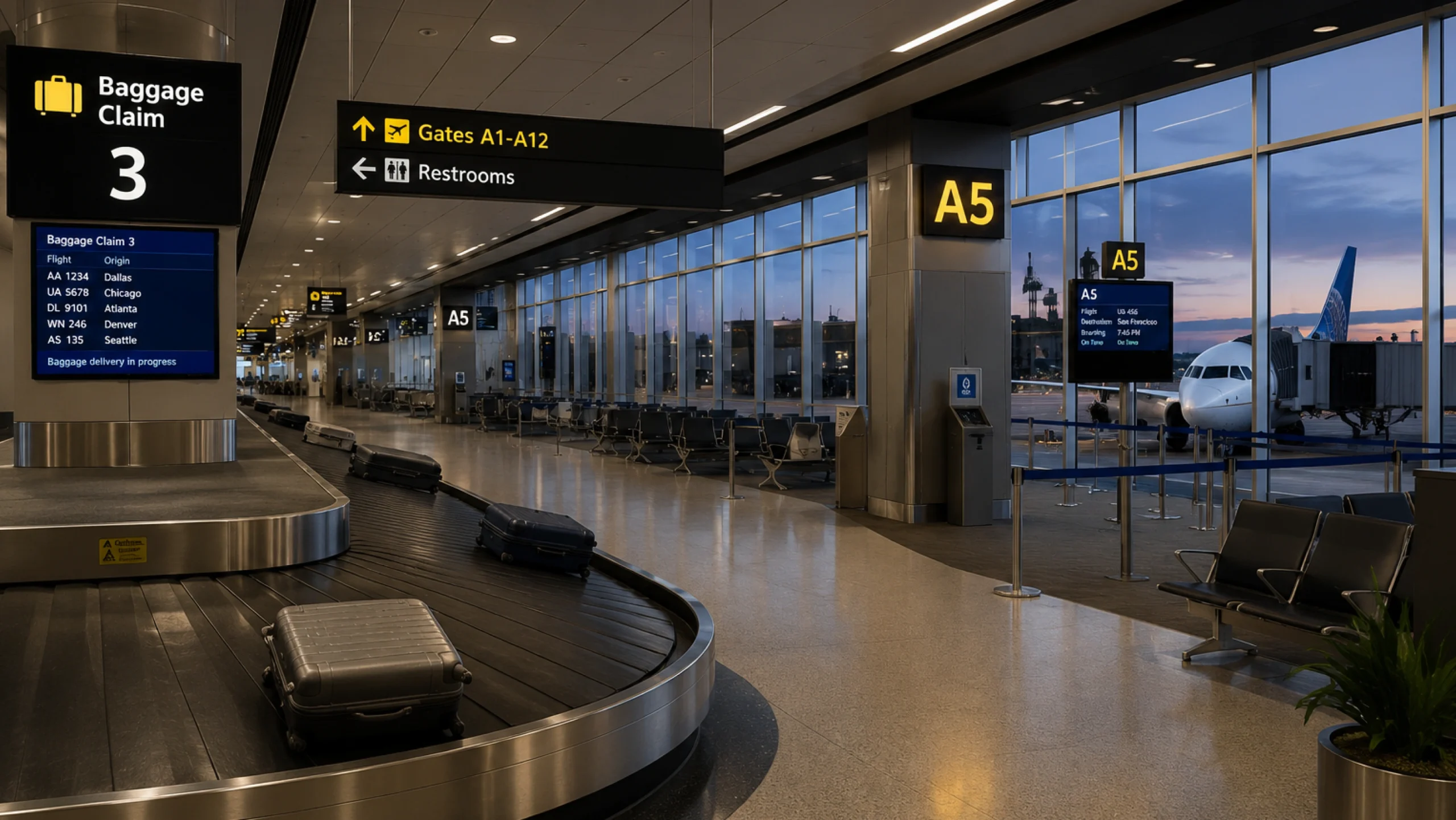
AI generates insight. IoT provides the situational picture. Automation converts both into consistent, scalable action, without the variability that accumulates in manual processes under operational pressure.
AI-managed security queues are delivering 18 to 25% shorter wait times with no additional staffing. Automated baggage reconciliation, real-time asset tracking, and dynamic gate allocation are removing coordination overhead from the handoffs between airlines, handlers, and air traffic management. Schiphol, Changi and Dallas Fort Worth are no longer running trials. They are operating integrated, AI-orchestrated workflows where automated systems share data continuously and adapt as conditions change.
Underpinning much of this is the growing deployment of digital twins: live operational mirrors that ingest gate data, air traffic feeds, ground handling inputs, and building systems simultaneously. When a gate reassignment occurs or weather compresses an arrival window, the twin recalculates downstream impacts across every affected function in real time. McKinsey’s October 2025 analysis identified digital twins as carrying the highest potential impact of any new digital airport technology, with only 8% of airports having fully deployed them so far.
The real cost of standing still
The airports that have committed to integrating IoT, AI, and automation as a single operational layer, rather than three separate investment streams, are seeing returns across the whole system. Faster incident response, more predictable passenger flow, lower energy costs, better cargo coordination are not isolated wins. They compound because the underlying architecture connects them.
The question for airport leadership isn’t whether this investment is worth making. The live results have settled that. The question is how quickly the integration can be built with enough coherence to start generating returns.
Airports building coherence today are gaining operational advantage. It will be genuinely difficult for those who wait to close the gap.
WAISL delivers integrated digital infrastructure and intelligent operating platforms that help airports realise the full value of aviation digital transformation. To find out more, get in touch with our team today.