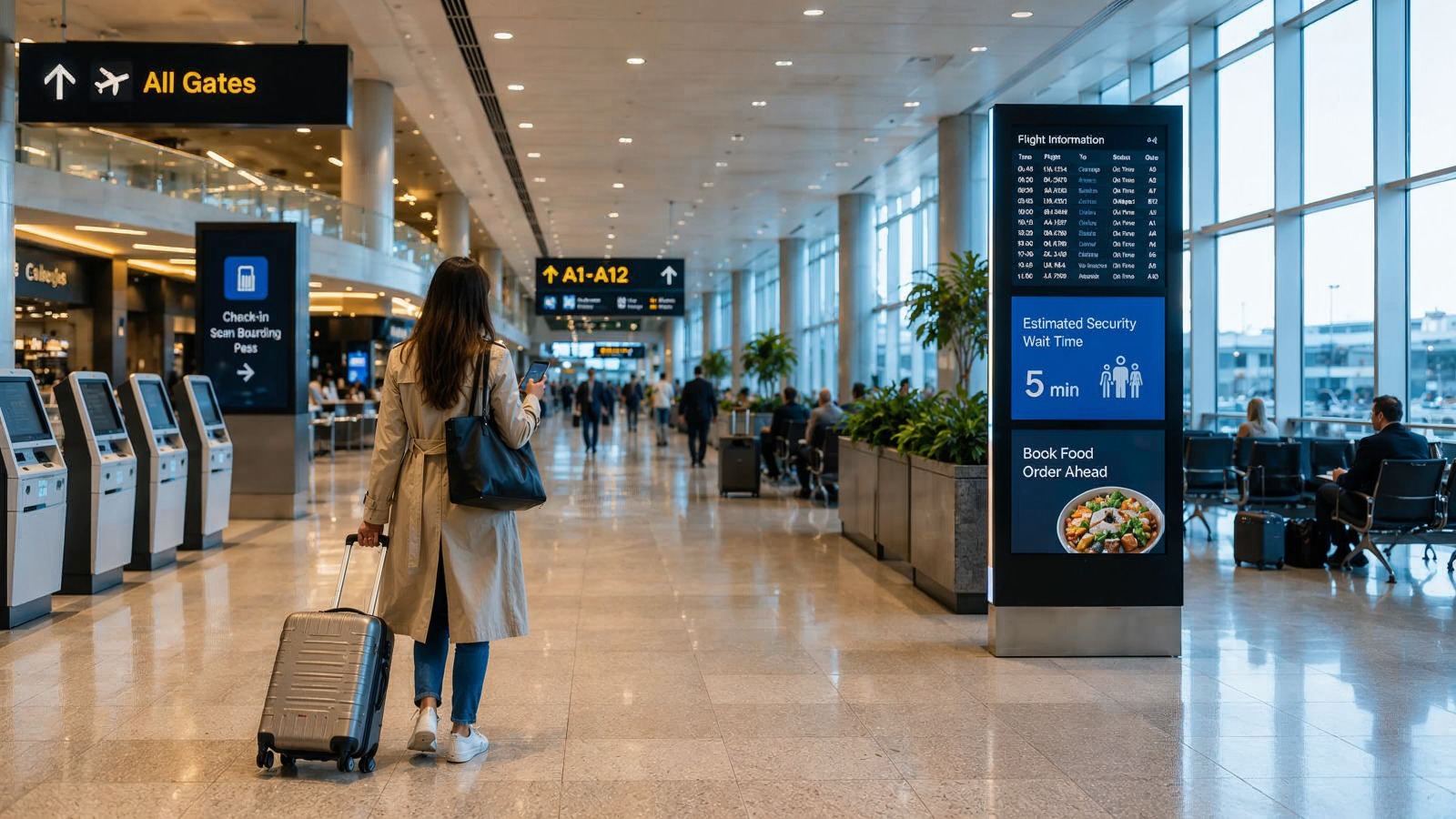
Consider what a passenger actually notices. They notice whether the queue moved. Whether the gate information updated before they had to ask. Whether their bag appeared without the low-level dread that it might not. These are small things, and they are entirely the point.
The airports that have understood this are the ones investing in digital transformation, not as a technology project, but as a passenger experience commitment. The global smart airport market reflects how widely that commitment is now being made. It was valued at USD 40.5 billion in 2025 and is projected to reach USD 83.9 billion by 2034, growing at a CAGR of 8.44% according to IMARC Group. Heathrow, Schiphol, Doha, and Istanbul are named in the FTE Airport Digital Transformation Power List EMEA 2026 as leaders already embedding AI, automation, and IoT across operations. The gap between these airports and others is widening with every year that passes.
With global aviation carrying over 4.7 billion passengers in 2025 and volumes still rising, the question is no longer whether to invest in digital transformation. It’s whether the investment is coherent enough to deliver what the passenger actually feels.
Why the legacy model is failing passengers
Check-in, baggage, security, and gate management have historically run on separate systems that rarely share data. The operational consequence is an airport that is reactive rather than predictive. The passenger consequence is a journey where each stage feels disconnected from the one before.
A queue builds at security not because no one saw it coming, but because the system that could see it had no reliable way to act on it in time. A gate change propagates slowly not because the information was unavailable, but because it had to travel manually through several handoffs before reaching the person who could update the board. These are not technology failures. They are integration failures, and they have a direct, felt impact on the passenger standing in the queue or staring at the departures screen.
Digital transformation within the travel industry is addressing precisely this: replacing fragmented, reactive coordination with connected, predictive operations where the passenger experience is the output being optimised.
The passenger journey rethought at every stage
The most meaningful changes are happening at the points passengers find most stressful: arrival and check-in, the security checkpoint, and the gate.
At landside, airports that have deployed computer vision for queue monitoring can now identify congestion before it becomes visible to the naked eye and alert operational teams in time to act. The passenger’s experience of this is simply that the queue was shorter than expected. The technology is invisible. The relief is not.
At terminal, the traditional model forces passengers to prove their identity repeatedly at every stage. Connected airports verify identity once and carry it forward. Passengers present themselves and the airport already knows who they are.
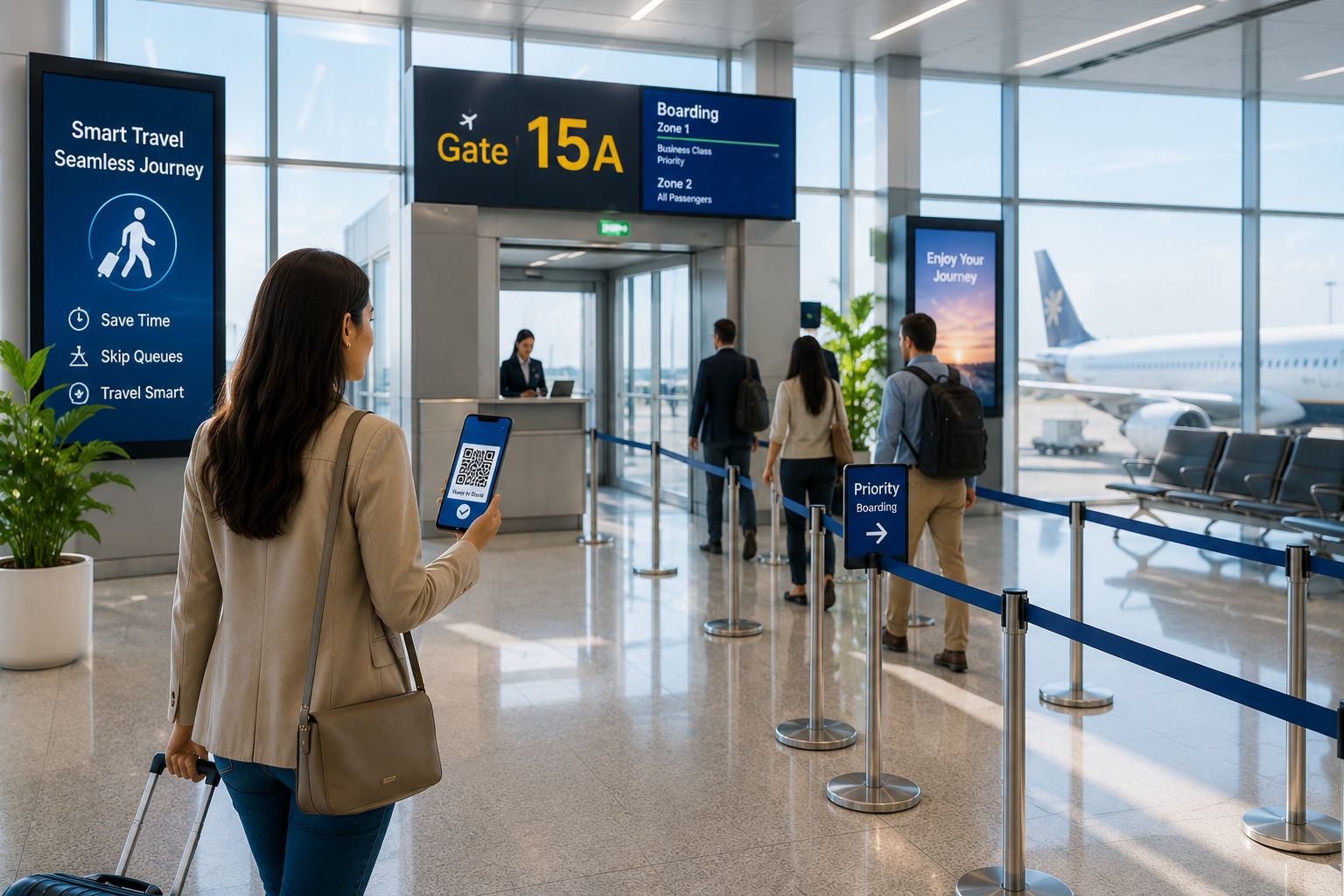
At airside, real-time passenger-flow data converts dwell-time from a problem into an asset. Operational teams can act on what is happening now, not what happened an hour ago. Retailers can position staff and inventory based on live footfall. And when a gate changes or a delay develops, the information reaches passengers through the right channel at the right time, rather than after they have already walked to the wrong gate.
Biometrics: the technology passengers are already embracing
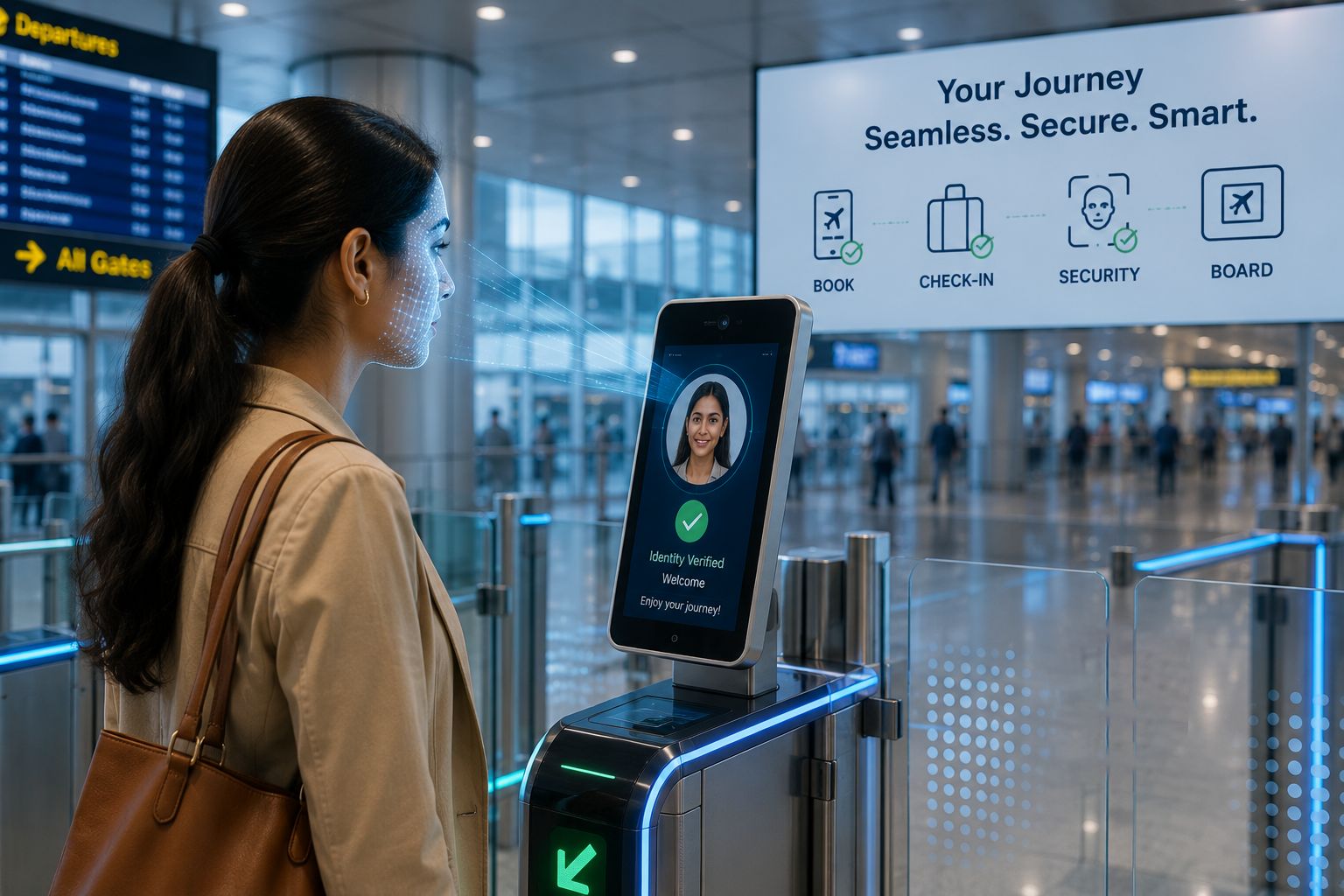
Biometric adoption is no longer a proof-of-concept conversation. According to IATA’s 2025 Global Passenger Survey, half of all travellers used biometric identification at some point during their airport journey, up from 46% in 2024 and nearly 20 percentage points higher than in 2022. Of those who used it, 85% report being satisfied with the experience.
The preference is clear. Seventy-eight per cent of passengers say they want a single app combining a digital wallet, digital passport, and loyalty credentials for the entire journey. They’re not asking for more technology. They’re asking for less friction, and biometrics, done well, delivers precisely that.
Singapore’s Changi Airport is already automating approximately 95% of immigration processing, with clearance times as little as ten seconds. Abu Dhabi’s Zayed International Airport is embedding biometric sensors at every checkpoint. These are not future ambitions. They’re operational realities that are already shaping what passengers expect everywhere else.
For airports still in the early stages of biometric adoption, the relevant question is not whether to proceed. The question is whether the rollout will be integrated with identity management, gate systems, and retail platforms, or whether it will become another siloed tool that creates a new kind of friction.
Predictive maintenance: the passenger never sees it, but always benefits
To the passenger, a conveyor belt that stops during peak hours is a problem with no obvious cause. To the operator managing the fallout, it’s a failure that was, in many cases, predictable.
Sensor-driven maintenance platforms now provide early warning of equipment failures across baggage systems, airfield lighting, and HVAC, typically 30 to 90 days in advance of the fault.
The passenger benefit is invisible: the belt keeps moving, the gate bridge operates, the terminal stays at the right temperature. That invisibility is exactly the point. A journey with no failures noticed is simply a smooth journey.
AI: from reactive to predictive operations
The change AI brings to airport operations is not that airports can now gather more data. Most already had more data than they could use. The change is that AI can analyse it continuously, identify patterns invisible to manual review, and surface decisions before the window to act has closed.
Passenger-flow modelling can identify a bottleneck forming at security 20 minutes before it becomes a queue. Energy AI can reduce consumption during low-occupancy periods without any impact on terminal comfort. Baggage systems can flag a routing anomaly before it becomes a mishandled bag.
The critical caveat is integration. An AI tool running alongside operations, disconnected from live terminal data, generates analysis that arrives too late or acts on information that is already stale. Connected to the operational architecture, it is, as the evidence consistently shows, a force multiplier.
The integration gap is the real gap
The pattern that distinguishes underperforming airports from those delivering consistent passenger experience is not which technologies they’ve purchased. It’s whether those technologies are connected to each other.
Biometrics not linked to identity management creates a checkpoint that is faster but not seamless. AI tools disconnected from live operations produce recommendations that come too late. Good technology, poorly integrated, can make an airport feel more complex to navigate, not less.
The airports setting the standard are those that have built a connected digital ecosystem: a foundation where real-time data flows across systems, where a decision made at the gate is immediately visible to baggage, ground handling, and retail teams, and where the passenger benefit is felt at every stage of the journey rather than at isolated touchpoints.
What airport leadership should prioritise now
An honest audit of current architecture, mapping unused data, identifying manual handoffs, and locating integration gaps, is the most valuable step an airport operations team can take in 2026. It’s also the step that reveals how much value is already sitting in existing investments, waiting for a connected layer to activate it.
Digital transformation in the travel tech industry rewards early movers. The passengers who walk through Changi or Zayed International this year will carry that experience as their expectation for every airport they use next. Airports that treat this as a future problem are already managing the consequences of that decision.
WAISL’s systems integration approach helps airports build the connected digital foundation that turns technology investment into passenger experience. Get in touch with our team to learn more.