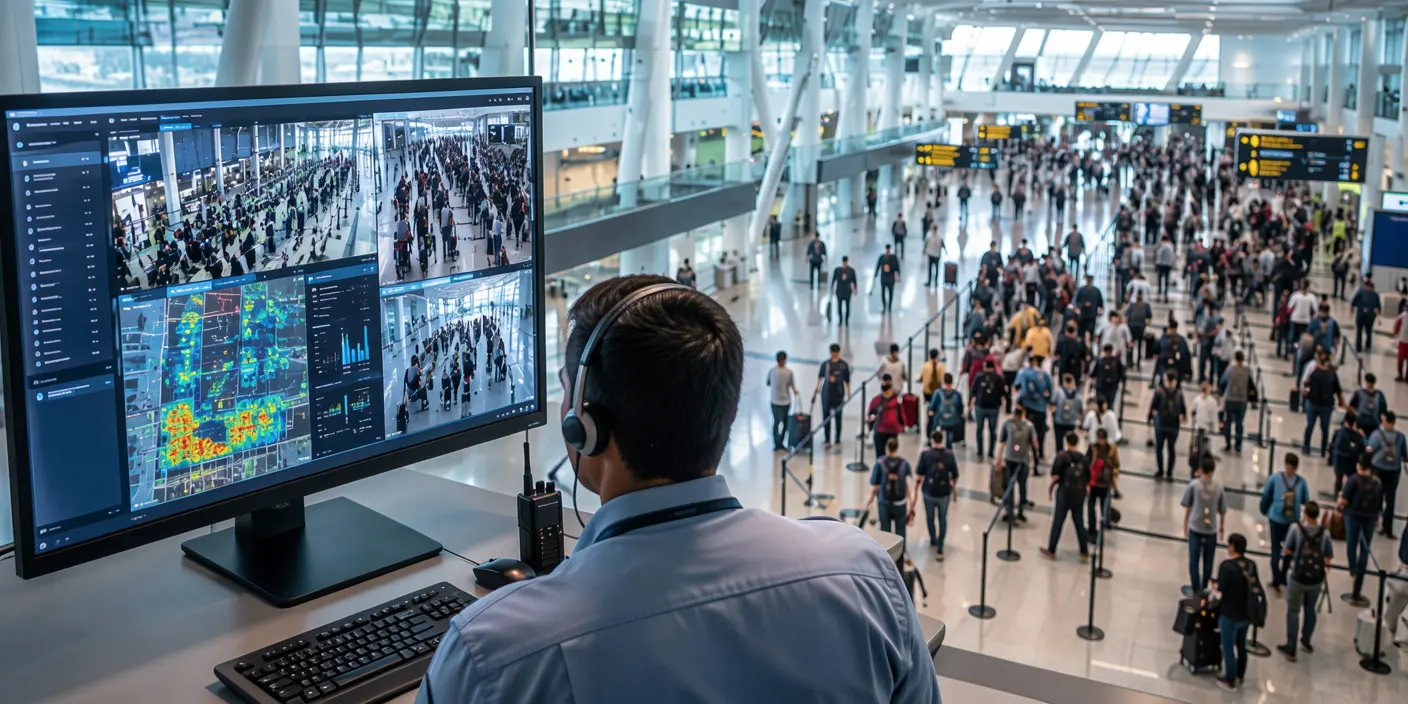
By the time a queue spills past the barriers, someone has already noticed the crowd. A staff member walks the terminal floor, spots the backlog building near security, and radios for support. Ground teams scramble to open another lane, but the delay has already reached passengers standing in the queue.
Global air travel is not slowing down enough to let this problem resolve itself. IATA expects passenger numbers to reach 5.2 billion in 2026, with demand set to more than double by 2050. Every one of those passengers moves through a terminal that was, in most cases, designed for a smaller volume of people.
The technology built to manage increasing volumes is expanding just as quickly. According to MarketsandMarkets, the global video analytics business is projected to grow from roughly $14.65 billion in 2026 to $41.39 billion by 2031, driven largely by AI-powered real-time monitoring. That is not a coincidence. Airports are moving from cameras that simply record to cameras that interpret what they see.
This shift changes what passenger processing actually means. It stops being a matter of adding more counters or more staff and becomes a matter of seeing congestion form before it impacts passengers.
Why terminals still operate on hindsight
Most terminal monitoring was built for a different job. CCTV footage helps operators piece together what happened after an incident, but it was never designed to flag a queue while it’s forming. An operator watching forty screens at once is not going to catch a slow build-up near a departure gate until it’s already visible from across the hall. The gap between when congestion starts and when someone notices that congestion is where most terminal disruption lives, not in the queue itself.
What a camera can tell an operations team
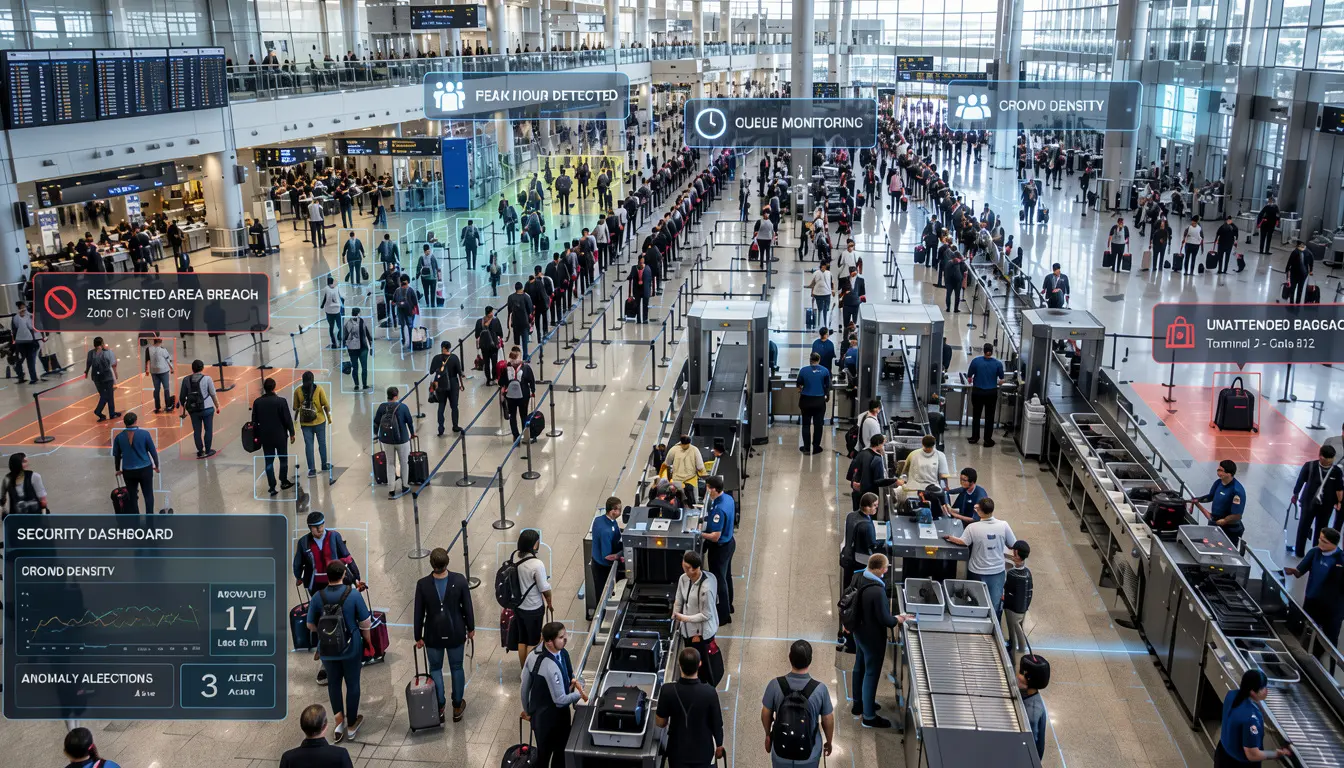
Modern video systems don’t just watch a space, they measure it. Density, dwell-time, flow-direction, and the speed at which a crowd is dispersing or gathering can usually be extracted from existing camera feeds without new hardware. A lane that is filling up thirty per cent faster than usual gets flagged automatically – long before a human would notice the same trend. This is the difference between a control room that reports what happened and one that anticipates what is about to happen.
From watching queues to predicting them
Video analytics become far more useful once they’re paired with forecasting. Predictive analytics layered on top of live camera data can show how a security queue will look based on flight schedules, historical footfall, and what cameras are picking up in the present. Staff get a heads-up instead of a scramble. A lane opens before a queue backs up. That small shift in timing is often the difference between a lane opening before a queue backs up and a lane opening after passengers are already stuck waiting.
Security that doesn’t slow anyone down
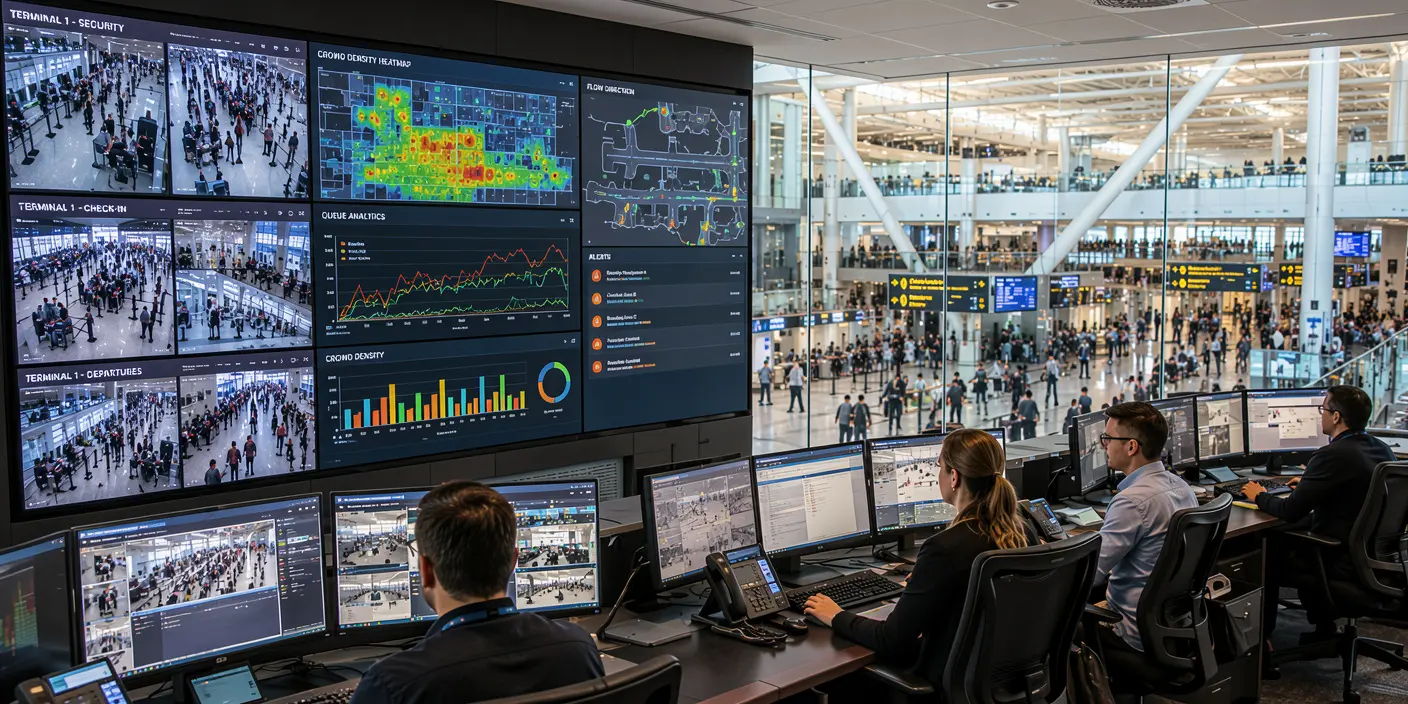
Crowd density and security risk are not the same thing, though they are often treated that way. Computer vision applied to airport operations can separate ordinary peak-hour congestion from an unattended bag, a person moving against the flow, or a restricted zone breach. This matters because the busiest moments in a terminal are precisely when security teams are most stretched and least able to spot anomalies. Automated detection does not replace the security team; it gives them the one thing they rarely have enough of during a rush: time.
What makes or breaks this technology
None of this works if data from the cameras, the baggage systems, and flight operations sits in separate silos. Cross-functional systems integration turns isolated camera feeds into a single operational picture that a control room can act on. Platforms such as AeroWise show what this looks like in practice by pulling video analytics, predictive modelling, and live operational data into one command view rather than a dozen disconnected dashboards. An airport that adds AI-powered cameras onto a fragmented tech stack can end up with faster alerts but the same slow response, because the people who need to act on the alerts are still working from different systems. The value is not in the cameras, but in what the cameras are connected to.
What this means for airport leadership
The question worth asking is not whether video analytics can spot a crowd building. Most modern systems already do that reasonably well. The real question is whether the surrounding operations, security, and IT systems are joined up properly to turn that early warning into action: a lane opened, a message sent, or a team dispatched before passengers even feel the delay. Airports investing in digital transformation are increasingly finding that technology is the easier half of the problem. The harder half is building an operational foundation where every system, from a camera on the ceiling to a person on the ground, is working from the same picture.
WAISL’s video analytics and system integration solutions help airports turn terminal monitoring into a genuine early-warning layer, connecting cameras and predictive models into one coherent picture instead of a dozen separate ones. Get in touch with the team to learn more.