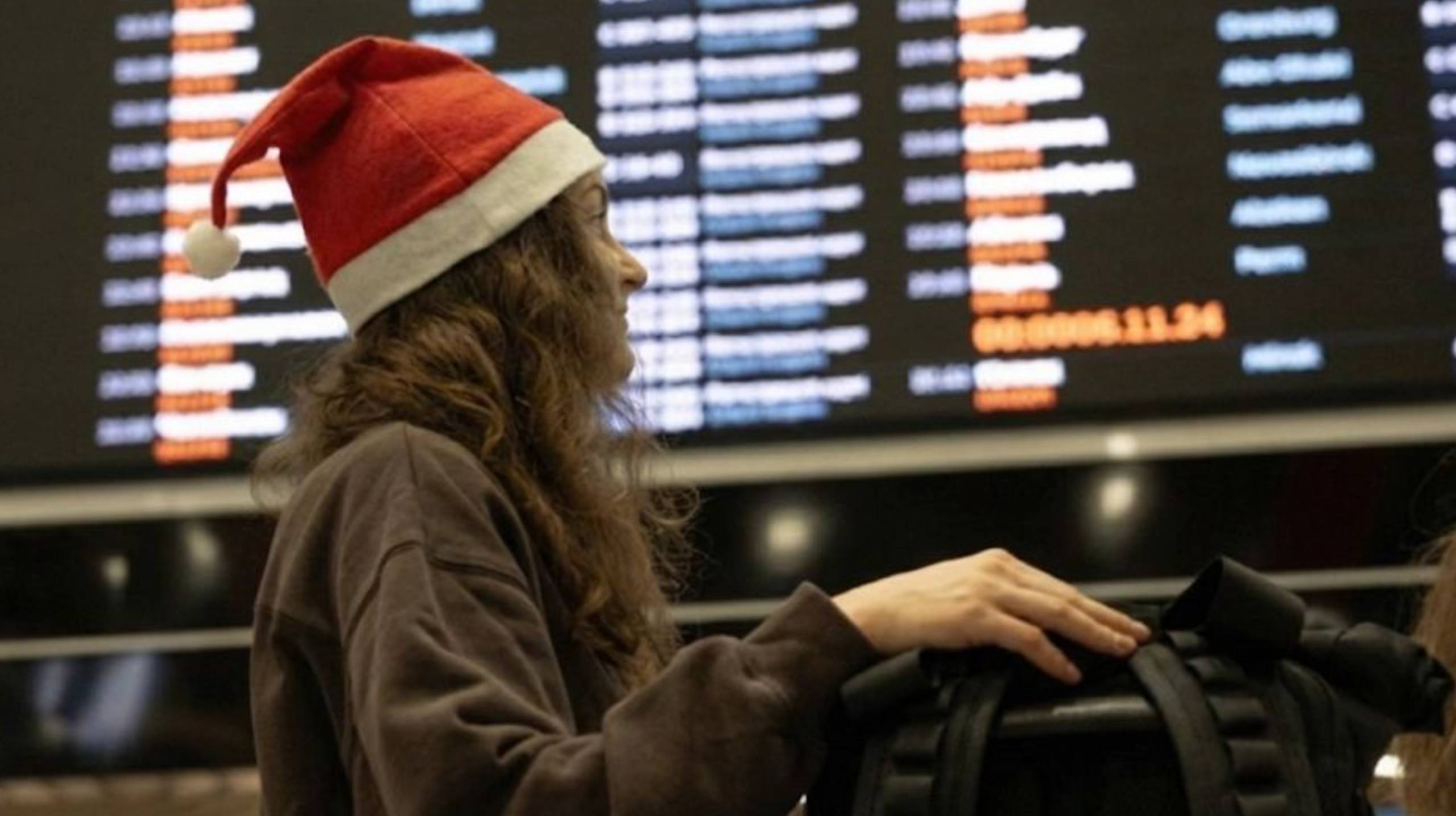
Airports all around the world still experience peak stress across operation every holiday season. The passenger traffic is high, aircraft operations are accelerated, and ground-handling teams are workers with compressed turnaround times.
Legacy operations management that relies on manual coordination, lacks consolidated systems, and makes siloed decisions, cannot sustain the service levels during these peak times. Digital Operations Management has thus emerged as a vital facilitator when it comes to airports aiming to ensure punctuality, reduce delays, and ensure passengers enjoy themselves whenever they are on the high density travel periods.
The Holiday Rush Issue: Passenger Volume and High-Risk Dependencies
- Passenger Load Volatility: The highest passenger traffic levels can be up to 25 to 40% higher than the daily traffic on large international airports. The uncertainty of late arrivals, missed connections and surge queues compound operational simplicity exponentially.
- Tight Ground Timelines: Turnaround times are reduced because flight schedules are reduced and aircraft utilisation increases. Any delay, like late catering, misaligned GSE, slow passenger loading, etc. can trigger a series of downstream delays.
- Multi-Stakeholder Coordination Issues: There is pressure on airlines, ground handlers, security agencies, terminal operators, retail, as well as immigration teams in the absence of real-time digital coordination, situational awareness fails, developing operation blind spots.
All three challenges are overcome by Digital Operations Management with combined data, automation, and predictive supervision.
Core Digital Operations Management Strategies
Airports need a single field of operation that unifies:
- Flight operations
- Baggage systems
- GSE and ramp services
- Passenger traffic and queue management
- Security and immigration status
- Gate/stand allocation
Digital ops management platforms are capable of predicting the high density timeframes and automatically activating resource surge models, including hiring more personnel at check-in or more GSE at particular stands. Predictive queuing algorithms are used to estimate congestion at the security, immigration or boarding gates and users can also change passengers or reallocate manpower before the congestion begins.
Digital Workflows for Baggage and Ramp Operations
Manual processes are substituted with digitisation of tasking, time stamping and closed loop validation. This ensures high accountability and traceability in:
- Baggage offloading and loading
- Cabin-cleaning cycles
- Catering and water services
- Aircraft fuelling
- Pushback preparation
The digital workflows during peak periods avert missed steps, lack of accountability or time lapse which is usually a contributing factor to delays.
Passenger-Flow Intelligence for Queue Management
Computer-vision and sensor-based analytics are used to obtain real-time queue data, average processing time, and saturation warning. These insights can help airports dynamically activate counters, reroute passengers or modify boarding strategies. The latter is vital when there is a surge in holidays.
Fully automated Gate and Stand Control
One of the most prevalent disruptors in peak-season is the gate conflicts. The dynamic reassigning of gates in the dynamic system of DOM systems is dependent upon aircraft readiness, passenger count, baggage conditions and adjacent stand restrictions, thus, last minute operational firefighting is minimised considerably.
Outcome: Stability of Operations in the High-stress Environments
As a result of using digital operations management, airports report:
- Better on-time performance (OTP) at peak times.
- Shorter queuing time by the passengers.
- Quick decision-making under AOCC/APOC settings.
- Reduced ground-handling interference.
- Increased passenger satisfaction and stability to variability.
WAISL’s solutions enable a combination of flight information, passenger analytics, GSE telemetry, digital workflows, and AOCC/APOC operations in a single ecosystem. Book a demo to discover how we do it.