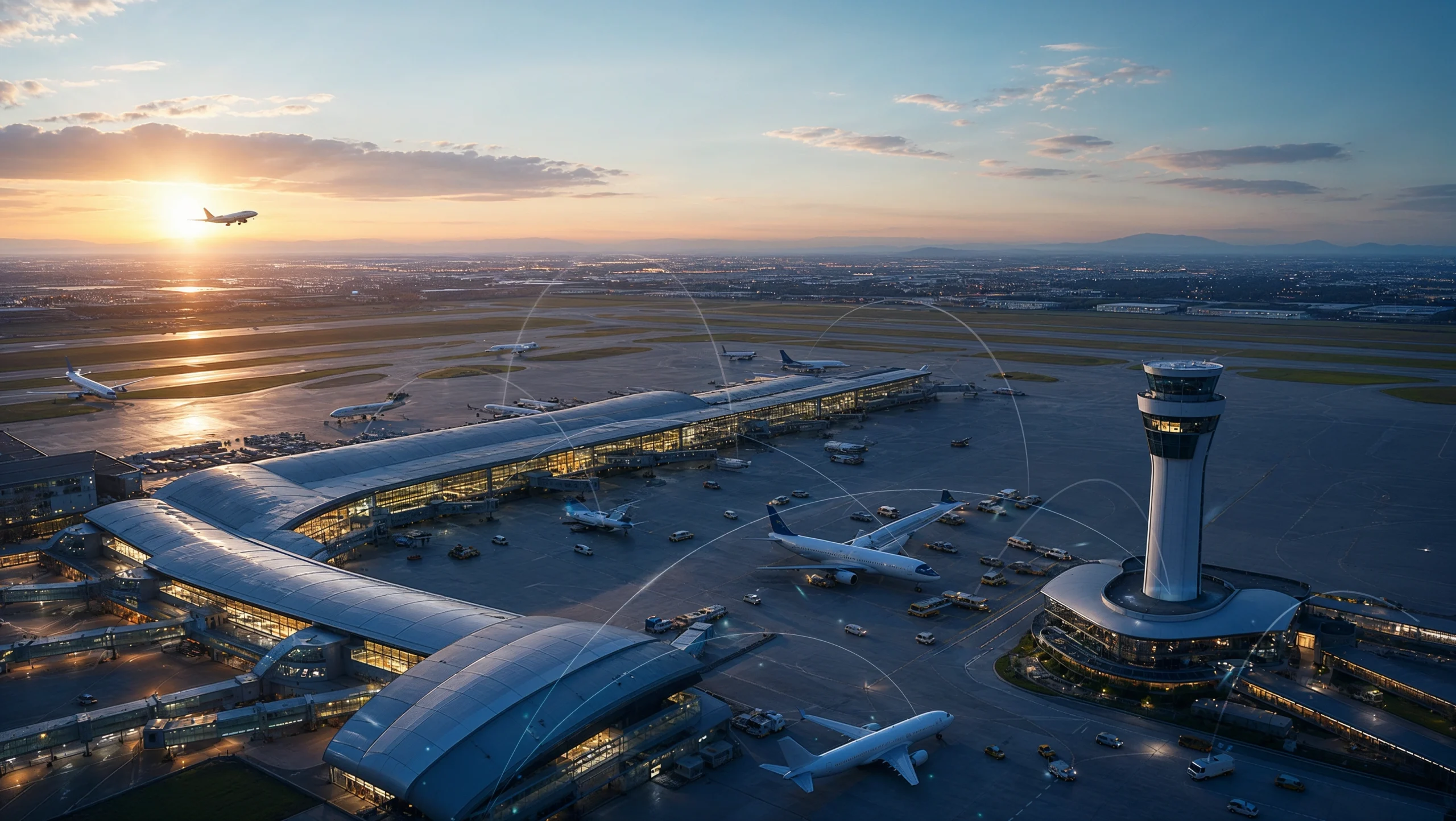
Twenty minutes. That’s all it takes to set off a ripple effect: a flight lands early, ground staff scramble for a stand assignment, baggage handlers are still finishing the previous rotation, and the transfer desk queue grows because nobody flagged the connection risk in time.
This is what an ordinary day looks like at most airports: capable teams firefighting disruptions that were foreseeable. The strain is only going to grow. Global air passenger numbers are on track to hit 5.2 billion in 2026, a 4.4 per cent rise on the previous year, and IATA’s longer-range projections have demand more than doubling by 2050. Airports built for yesterday’s traffic simply cannot absorb that curve by adding more counters and more staff.
Predictive analytics changes the underlying sequence of how operations respond. Instead of reacting after congestion builds or equipment fails, teams start making decisions before the disruption reaches the passenger. That requires looking at where the shift is happening, what it demands from an airport’s technology stack, and why decision intelligence is becoming the real differentiator in aviation, starting with predictive analytics.
When airports run on hindsight
Airports built most of their systems to record what happened, not to anticipate what is about to happen. Flight information displays, baggage logs, and security lane counters are extremely useful, yet they remain retrospective by design. An operations controller checking a dashboard in the evening is often looking at a problem that has already taken shape, too late to stop it.
That gap, between when a disruption starts and when someone notices it, is where delays compound and staff turn to firefighting instead of managing. Airport management teams have known this for years. What changed is the availability of data and the computing power to act on it faster.
What predictive analytics actually does
Strip away the jargon and predictive analytics is simple in intent: to use historical and live data to estimate what is likely to happen next, then surface that estimate early enough for someone to act on it.
For example, it can estimate how long a particular aircraft will take to turn around at a specific stand, it can predict whether a security lane is likely to exceed its target waiting time over the next 30 minutes, and it can identify passengers who are genuinely at risk of missing a connecting flight. When an airport has accurate, integrated data-feeding models that are trained on its own operational patterns, these predictions are based on evidence rather than guesswork.
From passenger flow to runway turnaround

The most visible application sits at passenger touchpoints. Predictive models paired with passenger processing systems can predict a queue build-up at check-in or security before it actually happens, giving staff time to open another lane or redirect flow. The same logic extends to the bag drop, boarding gates, and immigration, wherever passenger movement is measurable.
The same principle extends back into operations, covering apron management, stand allocation, and turnaround sequencing, all of which benefit from forecasting rather than reaction, because a five-minute prediction on a delayed pushback can be the difference between an on-time departure and a missed slot.
Maintenance that happens before the failure
Equipment failure is one of the most expensive categories of airport downtime, because teams tend to discover it at the worst possible moment. Like an escalator stopping mid-shift, a baggage belt jamming during peak departures, or an e-gate going offline during an arrivals surge.
Predictive maintenance models trained on sensor data, usage patterns, and historical fault records can flag the components approaching failure before they actually fail. This does not eliminate downtime altogether, no system does, but it shifts maintenance from a reactive schedule to a planned one, which matters when the alternative is a queue backing up because one lane is unexpectedly out of service.
Building the decision layer that holds it together
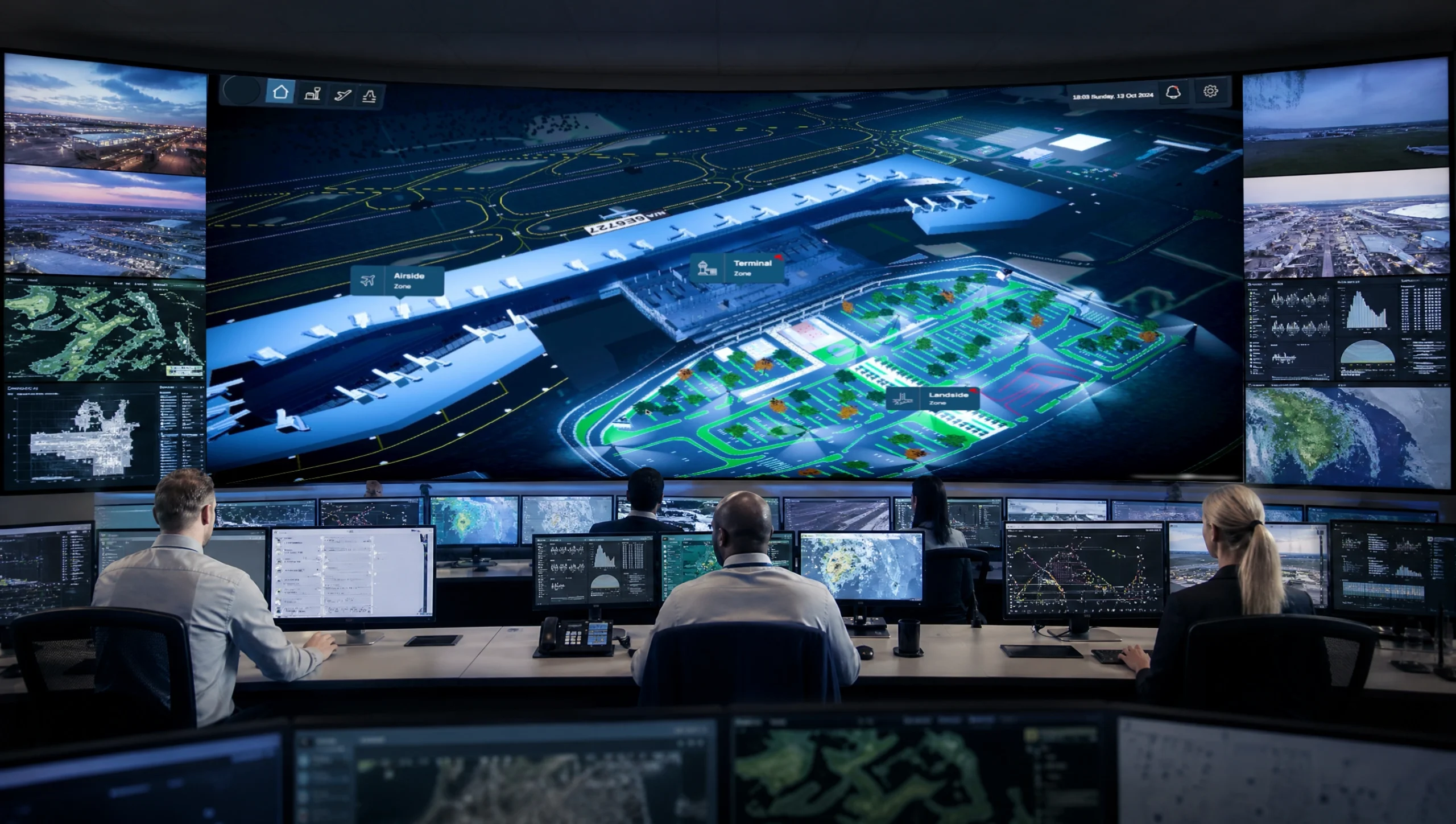
A set of disconnected tools can’t hold everything together. An airport running six systems that are not linked to each other ends up with multiple viewpoints instead of a single one. This is where systems integration and master data management become the foundation for a single, reliable data layer that predictive models can draw from. It’s the one that builds baggage systems, flight operations, security, as well as biometrics and facial recognition into a shared operational picture.
If the foundation is wrong, then even the best predictive model ends up working with fragmented and unreliable inputs. But if it’s done right, the same infrastructure strengthens the cybersecurity posture. A well-integrated environment is easier to monitor than a scattered one built up over a decade with point solutions.
The human side nobody should skip
None of this replaces the operations team. A prediction is only useful if someone has the authority and context to act on it, and that still requires trained staff who understand both the technology and the reality on the ground.
Airports getting the most value from predictive analytics tend to be the ones treating it as a decision-support layer for their people, not a replacement for them.
What this means for airport leadership
For airports weighing where to invest next, the question is not whether predictive analytics works, but whether the underlying systems are mature enough to support it. So, it’s worth asking if digital transformation efforts so far have built genuinely integrated infrastructure or simply added more disconnected tools to an already crowded stack. Operations management is shifting from a discipline built on dashboards and reports to one built on forecasts and pre-emptive action. The airports making the best progress are often those that begin by assessing how well their existing systems work together before investing in new technology.
WAISL’s systems integration approach helps airports bring predictive analytics, biometrics, and operational data together into one connected foundation, turning forecasting into action instead of another dashboard nobody has time to watch. Get in touch with our team to learn more.