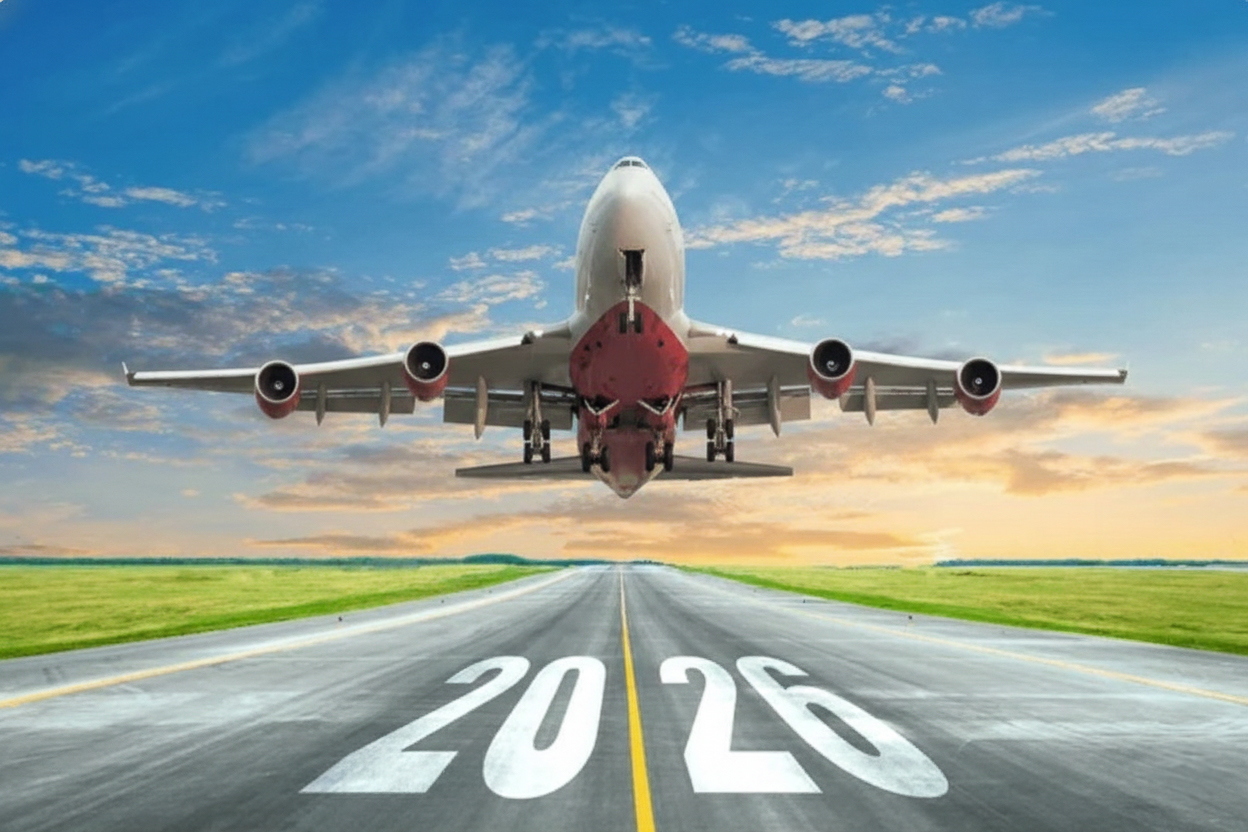
As demand for air travel is expected to rise to 18.9 billion passengers by 2047,airports are under increasing pressure to implement sustainable practices, increase efficiency and provide seamless travel experiences. In 2026, airports will determine their level of success by how well they use operational intelligence through the use of AI and digital technology rather than just the amount of infrastructure they have built.
Proactive Operations
Forecasting using AI can prevent issues such as climate change and other disruptions from occurring; for example: if an airport has a large surge of passengers coming in, the airport will be able to allocate resources accordingly. According to a new study released by Gartner, 40% of all enterprise applications, including those used by airports, will have built-in AI Agents. The use of Agentic AI can reduce the number of delays and increase the ability for an airport to provide on-time transportation compared to airports using legacy systems.
Read our detailed blog on predictive operations to know more here.
Integrated Command Centers
Unified platforms such as WAISL’s AeroWise or Abu Dhabi’s ITAM leverage digital twins that integrate airside, security and flow data into a single system to enable real-time decision-making. Almost 50% of airports plan to implement biometric-integrated command centers by the end of 2026. Delays in coordinated responses may be encountered by those who are late to adopt biometric-integrated command centers.
Read our blog on how system integration is enabling the future for more here.
Passenger Experience KPIs
Biometric and One ID efforts by IATAhave reduced wait times at airports such as Changi and Heathrow, linking operational metrics to customer satisfaction. The use of emotion analytics along with retail apps will help to create a customised shopping experience for airline customers, enabling airlines to retain them and offer a hassle-free travel experience.
Sustainability Strategies
Microgrids, solar farms, and Sustainable Aviation Fuel (SAF) will all improve the prospects of decarbonization through artificial intelligence (AI). This will create independent, cost-effective power solutions from already existing urban infrastructures.
Cyber Resilience Imperative
eCommerce Cargo Digitisation has made the need for connectivity, real-time detection and cyber resilience options necessary. Gartner predicts that AI will play a dual role in supporting resilience from cyber attacks in 2026.
The Thinking Airport
Airports will benefit by using data-enabled technologies to operate with an AI ecosystem to perform faster and more efficiently. WAISL will be a pioneer for identifying predictive airport operation centers where data analytics and aviation expertise enable the future of aviation together.