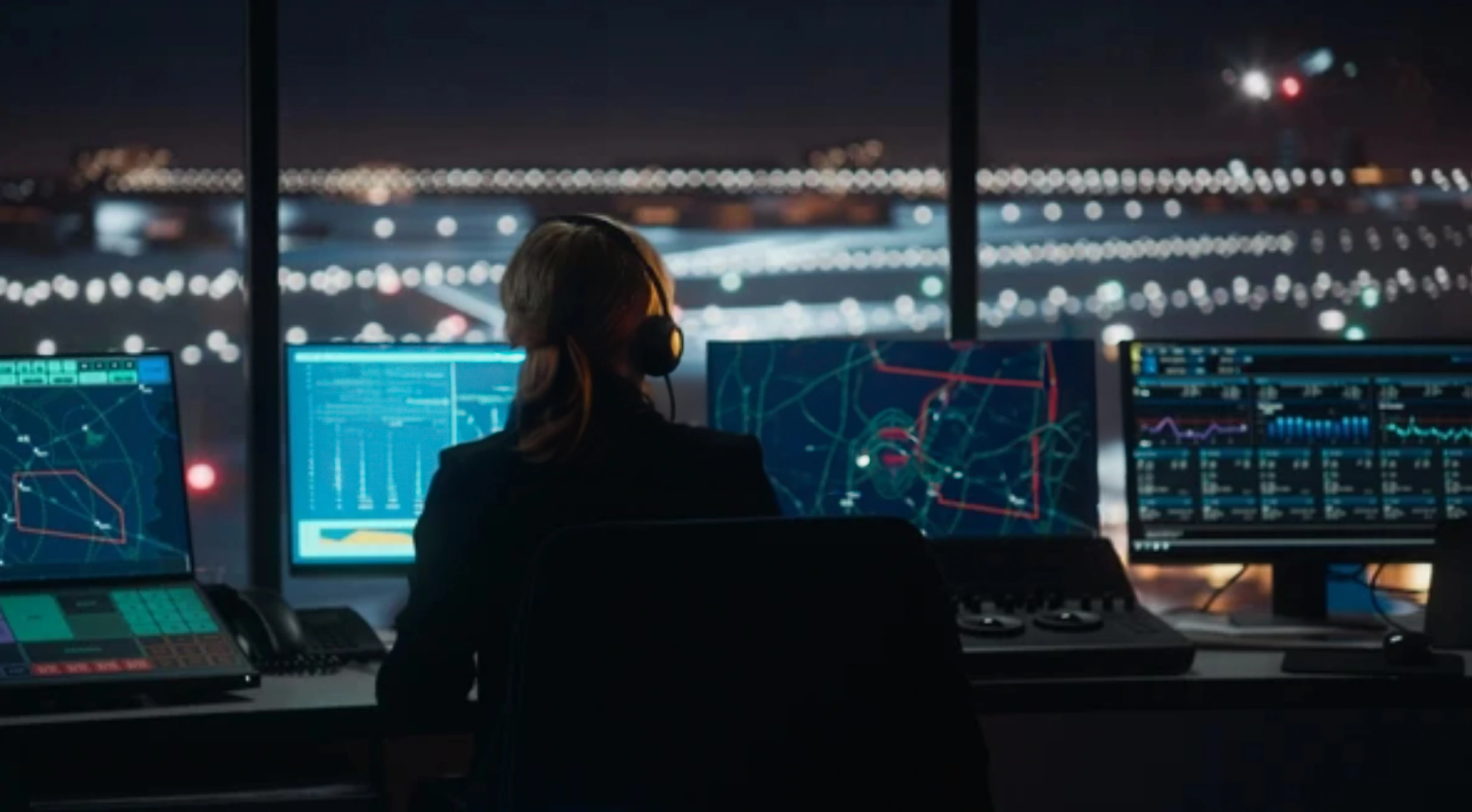
An airport does not run on a single system. It is a living network of systems that must think, decide, and act in real time.
Each decision in the airport environment operations, whether in flight schedules, baggage handling, security screening or even retail operations, is connected. Airports that are run in silos miss out on efficiency, visibility, and resilience.
Cross-functional integration of a system is no longer a digital luxury. It is the foundation of modern airport functions.
The Complexity of Operations in Airport Ecosystems
Airports operate at the intersection of aviation, logistics, security, hospitality, and digital infrastructure. Their core operational domains are:
- Air traffic control and airside operations.
- Passenger processing and terminal operations
- Logistics and baggage handling.
- Security and surveillance
- Turnaround management and ground handling.
- Parking, commercial and retail services.
Every area has its own technologies, sellers, and processes. In the absence of an integration, data is disjointed, decisions are slow, and passengers are not served well.
Real-Time Decision Making Depends on Integrated Data
Airport operations are very time-sensitive. One flight delay is capable of creating a ripple effect through the allocation of gates, crews, baggage, security personnel, and connections. In the situation when all the information is distributed among disconnected systems, the airport teams do not have a single operational picture and have to respond instead of predicting a failure.
Integrated data platforms need flight operations, gate management, baggage systems, and security intelligence on a single command view. By using real-time dashboard displays and AI-based alerts, airport operations centres can anticipate disruptions, optimise resources, and proactively intervene until delays propagate throughout the network. Integrated data is what keeps an airport with high throughput controlled rather than in a state of systemic chaos.
Passenger Experience Requires System Orchestration
Passenger processing cuts across several systems and stakeholders, such as the check- in, security, immigration, boarding, bag-claim and commercial services. Such systems, when working in silos, expose passengers to long queues, poor service delivery, and irregular travel time.
Next-gen passenger by Waisl allows biometric identity platforms, airline departure control systems, security screening tools and passenger flow sensors to collaborate as a cohesive ecosystem. Queue management platforms are able to dynamically optimise staffing and lane allocation using live flight and passenger information. When orchestration is performed right, passengers flow becomes a seamless and friction-free experience instead of a row of stops and starts.
Baggage and Turnaround Operations Are Highly Interdependent
Aircraft turnaround workflows are closely connected with baggage handling, ramp operations, ground handling and flight operations. Any malfunction between these systems causes misplaced baggage, extended ground time, and fines to airlines.
Combined turnaround and baggage handling systems offer real-time tracking, predictive notifications, and team coordination. When the ramp teams, baggage handlers, and flight operations are on a common platform of operation, aircraft ground time is minimised, on-time performance is enhanced, and airline satisfaction is augmented. In this case, integration directly converts into quantifiable operational and commercial results.
Security and Surveillance Need Unified Intelligence
Airports use a variety of security tools such as CCTV, access control, perimeter intrusion detection, and behavioural analytics. When such systems are autonomous, they provide blind spots and slow response to incidents.
Unified command and control platforms combine sensor, video analytics, and access system data into one common situational awareness layer. Integrated security intelligence helps in quicker identification of anomalies, multi-agency reaction, and prevention of threats. Integration is not only about efficiency in the mission-critical but also about safety and compliance with regulations.
Commercial and Non-Aeronautical Revenue Depends on Operational Data
Passenger data is becoming a major source of non-aeronautical revenue in the form of retail, parking, lounges, and advertising. In the absence of integration, commercial teams cannot see passenger flow, dwell time, and behaviour patterns, preventing the use of monetisation strategies.
Airports are able to optimise the placement of stores, staffing, and promotions when passenger flow analytics is combined with retail and commercial platforms. Parking, premium services, and lounge dynamic pricing models can be achieved as long as operational data drives business systems. Integration transforms passenger flow into a quantifiable commercial asset.
Resilience and Crisis Management Require System Interoperability
Weather, cyber, infrastructure and security incidents continue to pose a threat to disrupting the operations of airports. Siloed systems create delays, broken, and futile crisis responses.
Real-time operations, security, IT and communication teams are interconnected, using integrated incident management platforms. Digital twins and predictive analytics allow airports to model disruptions, develop mitigation measures, and coordinate responses. Operational resilience at modern airports is based on interoperability.
Future Airports Are Data-Driven Enterprises
The future of airports is turning into an intelligent system based on AI, IoT, automation, and sophisticated analytics. In the absence of cross-functional integration, digital transformation efforts are solitary and have minimal effects.
Integrated data platforms facilitate predictive maintenance, capacity optimisation, and semi-autonomous operations. Vendor-neutral architecture assures long-term scalability and eliminates technology lock-in. In future, airports will no longer be characterised by terminals and runways but by the extent to which they can integrate and operationalise data.
Conclusion
Operations in airport environments are too complex, too dynamic, and too interconnected to be managed in silos. Cross-functional system integration is what turns data into decisions, processes into performance, and infrastructure into intelligence.
Airports that invest in integrated digital ecosystems gain real-time visibility, operational resilience, superior passenger experience, and stronger commercial performance. Those that do not will struggle with inefficiencies, disruptions, and missed revenue opportunities.
In the future of aviation, integration is not an IT project, but the operating system of the airport.